
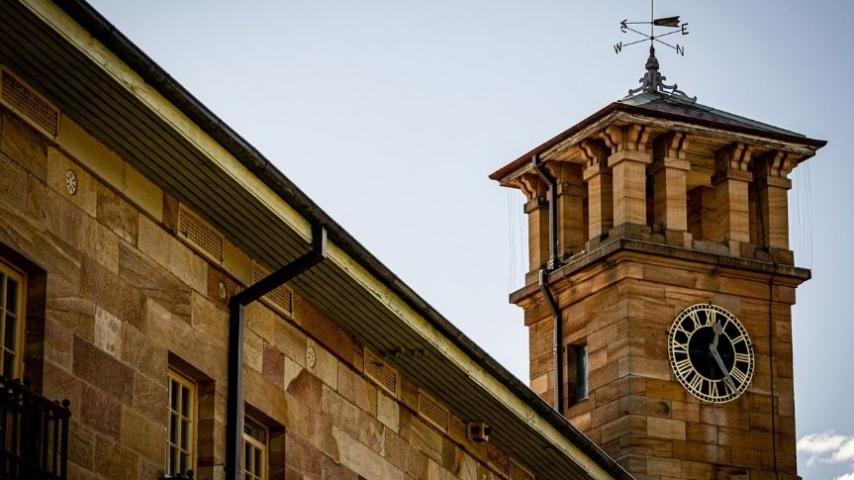
Bringing History to Life — Educational Experiences Designed for You
Discover Australia’s living history at the Parramatta Female Factory, where the stories of convict women, children, colonial institutions and the development of Australian society come alive.
At Parramatta Female Factory Friends, we believe history is best understood when it can be experienced, questioned and explored.
We offer bespoke guided educational tours for primary and secondary schools, home-school families, universities, historical societies, professional organisations and community groups.
No two educational groups are the same — and neither are our tours.
Our experienced volunteer guides work with teachers, lecturers, researchers and group organisers to develop engaging, age-appropriate experiences aligned with learning objectives, curriculum requirements and particular interests.
From an introductory primary school excursion to advanced postgraduate research, we can help transform an ordinary visit into an intellectually rewarding and memorable educational experience.
Every Tour Is Designed Around Your Learning Objectives
Our Tour Coordinator works directly with your school or organisation to create a program suited to your students, teaching objectives, time available and group size.
Your educational experience may include:
- Guided exploration of surviving convict-era buildings and the historic landscape.
- Stories of the women and children who lived, worked and experienced confinement within the Factory.
- Discussion of British colonisation, transportation, assignment, colonial labour and social history.
- Historical inquiry using documentary evidence, images, models and artefacts.
- Supervised hands-on learning with suitable objects and educational materials, where available.
- Investigation of women’s experiences, institutional authority, resistance and reform.
- Heritage architecture, archaeology, conservation and interpretation.
- Specialist discussions, research activities and access to educational resources by prior arrangement.
We can adapt the tour’s content, depth and delivery to your educational needs.
Primary Schools — Kindergarten to Year 6
Discover the Lives of Convict Women and Children
Our primary school tours introduce students to the fascinating world of colonial Australia through storytelling, buildings, historical objects and guided discovery.
Students explore what life was like for women and children in the early nineteenth century and how the experiences of people in colonial New South Wales helped shape the nation.
A visit can support learning about:
- Past and present: How families lived, worked, travelled and communicated.
- First contacts and British colonisation: Why the British established the colony and how colonisation affected Aboriginal Peoples and the landscape.
- The Australian colonies: Convict transportation, settlement, work, society and everyday life.
- Historical evidence: What buildings, photographs, records and objects reveal about the past.
- Women and children: Family separation, survival, resilience and changing social conditions.
- Heritage conservation: Why historic places should be preserved for future generations.
Activities can include supervised handling of appropriate educational artefacts, examining historical clothing and household objects, interpreting building features, and investigating the daily experiences of women and children.
Our guides tailor language, activities and discussion to the students’ ages and learning abilities.
NSW curriculum links: History K–10 (2012), including The Past in the Present, First Contacts and The Australian Colonies; and the new HSIE K–6 (2024) syllabus, including HS2-HIS-01 and HS3-HIS-01, from its 2027 implementation.
Secondary Schools — Years 7 to 10
Historical Inquiry Beyond the Classroom
The Parramatta Female Factory provides an exceptional opportunity for secondary students to investigate Australian colonial history through the physical evidence of a surviving historic institution.
Students can examine historical events, analyse competing perspectives and consider how women’s experiences have been represented, recorded and sometimes overlooked.
Our educational programs can explore:
- The British colonisation of Australia and its social consequences.
- Convict transportation and the experiences of women transported to New South Wales.
- The movement of peoples, migration, forced labour and developing colonial society.
- Women’s work, gender, class and institutional authority.
- Crime, punishment, imprisonment and resistance, including the 1827 Female Factory riot.
- The development of colonial institutions, including hospitals, orphan schools and penitentiaries.
- Historical interpretations, primary sources, archaeological evidence and heritage preservation.
Curriculum-Based Site Studies
Our guides can assist teachers in planning a site study relevant to the new NSW History 7–10 syllabus, with particular emphasis on historical inquiry, analysis of physical evidence, perspectives, continuity and change, and the impact of colonisation.
Teachers can discuss their preferred learning outcomes with the Tour Coordinator and request a program appropriate to their year group, historical depth study or assessment preparation.
NSW curriculum links: History 7–10 (2024), including Stage 4’s The era of colonisation and Stage 5 options such as The movement of peoples and Rights and freedoms of Australian women. The new syllabus is implemented from 2027.
Senior History and HSC History Extension — Years 11 and 12
Investigating, Interpreting and Questioning the Past
For senior History students, the Female Factory offers a particularly valuable environment for studying the construction of history and the challenges faced by historians.
Our specialist programs can move beyond the conventional guided tour to examine historical research, source reliability, conflicting accounts and the ways historical interpretation changes over time.
Students may investigate:
- Historiography: How different historians interpret convict women and colonial institutions.
- Primary and secondary sources: Comparing government records, convict indents, newspapers, personal accounts and physical evidence.
- Historical contestability: Examining different explanations of punishment, resistance, institutional reform and the 1827 riot.
- The silences in history: Understanding why women’s voices are often missing from official records.
- Historical methodology: Using archival collections, genealogical records, databases and digital humanities tools.
- The History Project: Developing research questions, evaluating evidence and exploring historical interpretations.
History Extension Programs
For Year 12 History Extension, a tailored visit can support the new NSW History Extension syllabus outcomes HX-12-01, HX-12-02, HX-12-03 and HX-12-04, including constructing historical arguments, investigating historiographical interpretations and evaluating sources.
Teachers are encouraged to contact the Tour Coordinator to discuss a specialised experience relating to their students’ History Extension work.
Universities — Undergraduate, Graduate and Postgraduate Programs
A Living Laboratory for Historical and Heritage Research
The Parramatta Female Factory is an important educational resource for universities and tertiary institutions across Australia and internationally.
We welcome undergraduate students, postgraduate coursework groups, master’s students, doctoral researchers and academic staff seeking a deeper understanding of Australia’s colonial and institutional heritage.
Our bespoke university programs can examine:
- Australian colonial and women’s history.
- Convict transportation, gender, labour and social control.
- Colonial and Victorian architecture, including the work of Francis Greenway and the development of institutional building design.
- Archaeological evidence, building conservation and adaptive reuse.
- Cultural heritage management, interpretation and World Heritage principles.
- Social history, institutionalisation, welfare and reform.
- Archival research, family history, prosopography and digital humanities methodologies.
Architecture, Archaeology and Heritage Conservation
The surviving buildings provide an opportunity to study colonial design, sandstone construction, nineteenth-century institutional architecture and the changing use of historic buildings.
A recent visit involved an entire Master of Architecture cohort, which explored the work of Australia’s colonial and Victorian architects and examined the architectural significance and development of the Female Factory precinct.
Advanced groups can discuss the challenges of conservation, heritage authenticity, archaeological interpretation and the protection of nationally significant places within changing urban environments.
Specialised content and access arrangements are discussed with university lecturers and course coordinators before the visit.
Learning Beyond the Standard Tour
Experiences We Have Created for Educational Groups
The flexibility of our tours has allowed schools and organisations to create experiences with particular meaning for their participants.
Honouring the Sisters of Charity
A specially tailored group tour incorporated a visit to the Sisters of Charity memorial, allowing participants with connections to the Sisters to reflect on their role in the history of the precinct and its later institutions.
A Full Day of Learning and Activities
Educational groups can work with the Tour Coordinator to plan an extended visit, combining a guided heritage tour with additional learning, recreation or sporting activities organised by their school or group. This can create a rewarding full-day excursion rather than a single classroom-style activity.
Home-School Learning Experiences
Home-school families and learning groups can enjoy smaller, more personal sessions, with greater opportunities to ask questions, examine historical artefacts and participate in guided activities suited to different ages and abilities.
Postgraduate Architectural Studies
University architecture students have explored the Factory’s historic buildings, construction techniques, architectural design and conservation challenges in specialist group visits.
These examples demonstrate what makes a PFFF educational visit different: we design the experience around the group, not the group around a fixed script.
Educational Groups and Community Organisations
Our group tours are also available for:
- Historical societies and family history organisations.
- Probus clubs, seniors’ groups and community associations.
- Religious, parish and faith-based groups.
- Professional organisations and industry associations.
- International study groups and visiting academics.
- Cultural, heritage and museum organisations.
- Teacher professional development and adult education groups.
We welcome groups with a particular interest in women’s history, convict ancestry, faith communities, heritage architecture, the history of medicine, or the broader development of Australian society.
Planning Your Educational Visit
Location: Parramatta Female Factory, 5 Fleet Street, North Parramatta NSW 2151.
Tour availability: Group and school visits are generally arranged Monday to Thursday, with other arrangements considered according to availability.
Duration: Standard tours take approximately 90 minutes. Specialised learning experiences and extended activities can be discussed in advance.
Group size: Large groups can be divided among several trained volunteer guides to support effective learning and visitor participation.
Standard tour price: $20 per participant. Accompanying teachers actively supervising booked groups are admitted free under the published tour arrangements. Specialised or extended programs are quoted separately.
Bookings: Please contact us at least four weeks before your proposed visit.
Accessibility and safety: Our Tour Coordinator can discuss mobility requirements, learning adjustments, weather considerations and the nature of the historic outdoor environment. Schools remain responsible for their own supervision, excursion planning and risk assessments.
Transport: Parramatta Light Rail stops at Ngara, a short walk from the historic precinct.
Create Your Own Educational Experience
Official curriculum references for teachers
Our tours are linked to NSW Curriculum as follows:
- History K–10 Syllabus (2012) — curriculum used in 2026.
- HSIE K–6 Syllabus (2024) — Outcomes — from 2027.
- History 7–10 Syllabus (2024) — from 2027.
- Modern History 11–12 Syllabus (2024) — new course staged from 2027.
- History Extension 11–12 Syllabus (2024) — implemented from Term 4, 2026.
Free Teacher Resources
Here are free Teacher Resources — Plan Your Parramatta Female Factory Excursion.
(TO BE UPDATED 1 NOVEMBER 2026)
Talk to Our Tour Coordinator
We would be delighted to work with your school, university or organisation to design an educational experience that is engaging, relevant and memorable.
When contacting us, please provide:
- School, university or organisation name.
- Preferred visit date and time.
- Student year level, university program or group type.
- Approximate number of participants and accompanying staff.
- Curriculum focus or specific areas of interest.
- Preferred duration and any additional activities.
- Accessibility or learning support requirements.
Our Tour Coordinator will discuss a suitable itinerary, educational objectives, guide availability, costs and booking arrangements.
Email: contact@parramattafemalefactoryfriends.com.au
Tour enquiries: 0456 787 252
Address: 5 Fleet Street, North Parramatta NSW 2151
Explore our Guided Walking Tours
Parramatta Female Factory Friends Inc.
Protecting the past. Researching the women. Sharing the stories.