
Between 1828 and 1856, approximately 7,000 convict women spent time at Cascades Female Factory, according to the historic site. Some stayed while awaiting assignment or employment. Others were sent back as punishment or entered while pregnant, nursing a baby or unwell. Cascades was the principal institution for convict women in Van Diemen’s Land and a sister site to Parramatta in the history of Australian female transportation. [16], [17]
From Hobart Town Gaol to the Cascades
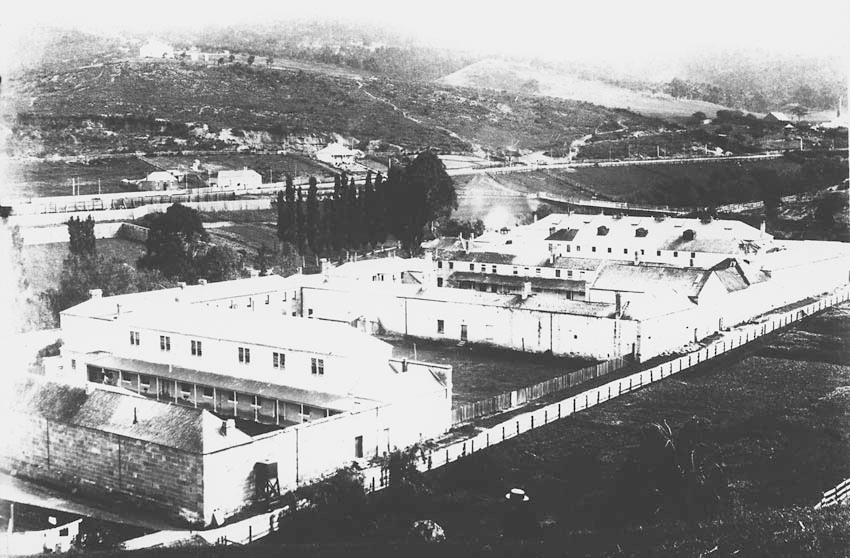
The first Hobart Town factory operated in rooms associated with the town gaol. In 1828 the colonial administration opened a larger establishment on the site of a former distillery beside the Hobart Rivulet. The new location put distance between the women and central Hobart, where officials believed that contact with townspeople undermined discipline. Yard 1 received its first 100 women in 1828. [9], [16], [18]
The compound developed into five yards as the institution took on more functions. Walls and gates governed movement and allowed officials to separate women by status and purpose. Over time the complex accommodated work, punishment and nursery care. The functions of individual yards changed, so plans should be read with their dates. [16], [18]
Work, punishment and resistance
Women’s work sustained the institution and served the colonial government. Textiles, sewing and laundry occupied many women, alongside the daily labour of cooking, cleaning and caring for others. Women were also sent out to work for employers. A woman could move between service and the factory several times as her circumstances changed. [9], [16], [18]
Officials used restrictions on movement, changes to rations and separate confinement to impose discipline. Women organised collectively, refused orders and sometimes escaped. The colonial inquiry into female convict discipline in 1841–1843 documented networks officials called the Flash Mob and shows that some women were transferred between Cascades and Launceston. Read the inquiry as evidence of both women’s relationships and the attitudes of officials who recorded them. [9]
Mothers, infants and the nursery
Cascades served as a place where women gave birth and cared for babies in custody. Overcrowding, damp conditions and illness took a severe toll. Nursery arrangements shifted over time, and the nursery at Yard 4, developed around 1850, is an important part of the surviving site. The Matron’s Quarters there helps explain how supervision and care were organised. [16], [18]
A woman’s conduct record may give only part of her family history. Search for the child in baptismal and death records and try variants of the mother’s surname. The National Library of Australia’s research guide points to a collection of baptisms of children of convicted women, 1833–1854. A baptism entry may name the ship on which the mother arrived and help distinguish women of the same name. [19], [21]
What survives and why it matters
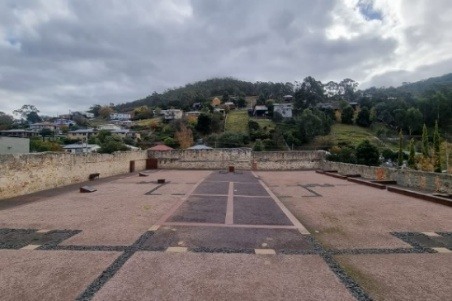
Cascades preserves perimeter walls, the Matron’s Quarters and archaeological evidence of former buildings. The yards and marked building footprints help visitors understand where women lived and worked and how the compound divided them. In 2010 Cascades became one of 11 places inscribed together on the UNESCO World Heritage List as the Australian Convict Sites. [16], [18], [22]
Parramatta offers a complementary view. It opened as a purpose-built complex in 1821 and preserves substantial buildings that illustrate accommodation, medical care and punishment. Cascades opened in 1828 and adapted a former industrial site, expanding by adding separate yards. Studying the sites together shows how a common system of transportation produced different institutions and different experiences for women. [2], [16], [18]
Trace a woman through Cascades
- Start with the Libraries Tasmania convict records guide. Search the Tasmanian Names Index for her name, aliases, ship and arrival year.
- Open the original conduct record. For women arriving under the assignment system, look for series CON40. The Libraries Tasmania abbreviations guide identifies casc as Cascades Female Factory.
- Record each dated movement and compare it with assignment, marriage permission, baptism, death or court records. Look up the original image when a transcription is ambiguous.
- Consult the Female Convicts Research Centre for biographical research and the Cascades historic site for interpretation and visit information. If the trail leads to New South Wales, consult the Parramatta State Archives guide.
Read the guide to all 13 female factories.
Sources
- Museums of History NSW, Female Factory, Parramatta
- Gay Hendriksen, Carol Liston and Trudy Cowley, Women Transported: Life in Australia’s Convict Female Factories
- Australian Government, Cascades Female Factory
- Cascades Female Factory Historic Site, Convict Women’s Tour
- Lovell Chen, Cascades Female Factory Conservation Management Plan
- Libraries Tasmania, Convict records: What is online?
- National Library of Australia, Female convicts research guide
- UNESCO World Heritage Centre, Australian Convict Sites